Herbal Chai: The Complete Guide
Last Updated: February 22, 2025 | 18 min read | Expert Reviewed
Table of Contents
- What Is Herbal Chai?
- Key Takeaways
- Herbal Chai vs Regular Chai — The Real Difference
- Ingredients That Make Herbal Chai What It Is
- Health Benefits (With Actual Sources)
- The Market Is Paying Attention
- Best Herbal Chai Brands — Tested and Reviewed
- What Real People Are Saying
- Two Recipes You Can Make Tonight
- Brewing Mistakes That Ruin Your Cup
- How to Buy Herbal Chai Without Getting Fooled
- Frequently Asked Questions
- Sources and References
What Is Herbal Chai?
Herbal chai is not regular chai with the caffeine removed. It is a completely different drink built on a different foundation.
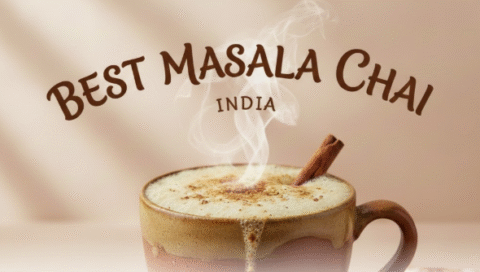
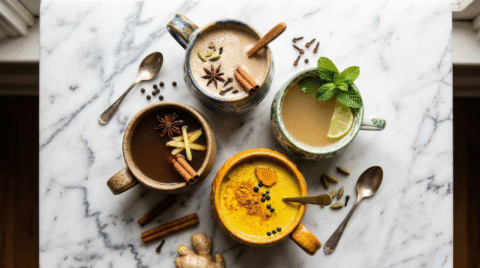
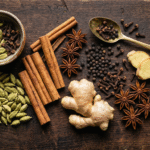
Traditional Indian masala chai uses Camellia sinensis — black tea leaves, usually Assam or CTC — boiled with milk, sugar, and spices. Herbal chai replaces that black tea base entirely with caffeine-free botanicals like rooibos, chamomile, tulsi (holy basil), dandelion root, honeybush, or peppermint. The spices stay the same: cardamom, cinnamon, ginger, cloves, black pepper, and sometimes star anise or fennel.
The result is a drink that carries all the warmth, aroma, and complexity of masala chai — but with zero caffeine. Not reduced caffeine. Zero. Because the base ingredient never contained it in the first place.
This distinction matters. “Decaf chai” is black tea that has been chemically processed to strip most caffeine out, typically leaving behind 2-5mg per cup and a slightly flat flavor. Herbal chai skips that entirely. It was never caffeinated, so nothing needs to be removed. According to Harvard’s Nutrition Source, herbal teas are naturally caffeine-free and undergo no decaffeination process — they simply never contained caffeine to begin with.
The word “chai” itself just means “tea” in Hindi. So “herbal chai” is technically “herbal tea” — but the term has taken on its own meaning globally to specifically describe caffeine-free infusions blended with traditional Indian chai spices. That is the drink this guide is about.
Key Takeaways
Zero caffeine, full flavor. Herbal chai uses plant bases like rooibos and chamomile that never contained caffeine. It is not decaffeinated tea — it is an entirely caffeine-free drink. Drink it at 10pm without consequences.
Backed by real research. The spices in herbal chai — ginger, cinnamon, cloves, cardamom — have documented anti-inflammatory, antioxidant, and digestive benefits in peer-reviewed studies published in PubMed Central and cited by institutions like Harvard and WebMD.
A $3.9 billion market. The global herbal tea market was valued at $3.9 billion in 2024 and is projected to reach $6.4 billion by 2033 at a compound annual growth rate of 5.67%, according to IMARC Group. This is not a niche hobby — it is a global movement.
17 minutes from stove to cup. Homemade herbal chai requires a saucepan, water, whole spices, an herbal tea base, and milk. No special equipment, no expensive tools.
Herbal Chai vs Regular Chai — The Real Difference
This is the most searched comparison in this category, so let’s answer it plainly.
The difference is the base. Everything else — the spices, the preparation method, the ritual of simmering and straining — is nearly identical.
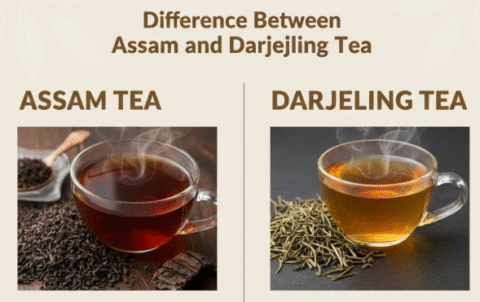
Base ingredient. Regular masala chai uses black tea (Assam, CTC, or Darjeeling). Herbal chai uses rooibos, chamomile, tulsi, dandelion root, honeybush, or similar botanicals.
Caffeine content. Regular chai contains 40-70mg of caffeine per cup, comparable to half a cup of coffee. Herbal chai contains 0mg. Not a trace. None.
Tannin levels. Black tea is high in tannins, which create that dry, slightly bitter mouthfeel and can stain teeth. Rooibos and most herbal bases are extremely low in tannins, giving herbal chai a smoother, naturally sweeter taste.
When you can drink it. Regular chai is a morning or afternoon drink for most people because of caffeine. Herbal chai works any time — including right before bed, especially with a chamomile or lavender base.
Flavor profile. Regular chai has a bold, malty backbone from the black tea that cuts through milk and sugar. Herbal chai is earthier, naturally sweeter (especially rooibos-based), and lets the spices take center stage rather than competing with tea tannins.
Pregnancy considerations. Regular chai’s caffeine content makes it something pregnant women are often advised to limit. Most herbal chai ingredients are generally considered safe during pregnancy, though licorice root should be avoided and you should always consult your healthcare provider.
The bottom line: herbal chai is not a lesser version of regular chai. It is a parallel drink — same spirit, different foundation, different strengths.
Ingredients That Make Herbal Chai What It Is
Herbal chai is a two-part system: a caffeine-free base and a spice blend. Understanding both parts helps you buy better products and make better cups at home.
The Herbal Base
Rooibos (Red Bush). The most common herbal chai base worldwide. Grown exclusively in South Africa’s Cederberg region. Naturally sweet, nutty, slightly vanilla-like. Contains unique antioxidants — aspalathin and nothofagin — found in no other plant. Pairs exceptionally well with cinnamon and cardamom. This is the base you will find in most commercial herbal chai products.
Chamomile. Floral, apple-like, calming. Makes herbal chai that doubles as a sleep aid. Best for evening drinking. The flavor is lighter and more delicate than rooibos, so the spices need to be dialed back slightly or they overwhelm it.
Tulsi (Holy Basil). An adaptogenic herb used in Ayurvedic medicine for thousands of years. Peppery, slightly minty, with a clove-like undertone. Creates herbal chai with an earthy depth that comes closest to replicating the body of black tea. Growing in popularity in Western markets.
Dandelion Root (Roasted). The coffee lover’s herbal chai base. Roasted dandelion root has a bitter, dark, almost coffee-like flavor that creates a robust, full-bodied chai. Popular in blends marketed toward people quitting caffeine entirely.
Honeybush. A close relative of rooibos, also from South Africa. Sweeter and more honey-like in flavor. Less common but excellent as a chai base because it adds natural sweetness without any added sugar.
The Spice Blend
Cardamom — The soul of chai. Found in 97% of all herbal chai recipes analyzed. Green cardamom pods, lightly crushed, release a complex flavor that is simultaneously citrusy, minty, and warm. There is no chai without cardamom.
Cinnamon — Present in 95% of recipes. Ceylon cinnamon (true cinnamon) is preferred over cassia for its subtler, more complex flavor and lower coumarin content. In herbal chai, cinnamon provides the backbone warmth.
Ginger — Used in 92% of recipes. Fresh ginger root, sliced thin, delivers a clean heat that builds gradually. Dried ginger powder is more concentrated but lacks the brightness of fresh. For herbal chai, fresh is worth the extra 30 seconds of prep.
Cloves — In 78% of recipes. Powerfully aromatic and numbing in excess. Two to three whole cloves per two cups is the standard ratio. Cloves carry one of the highest antioxidant concentrations of any spice measured.
Black Pepper — Found in 68% of recipes. Often overlooked but essential. Black peppercorns add a low-level heat that ties the other spices together and enhances the bioavailability of compounds in ginger and cinnamon. Three peppercorns per two cups is standard.
Star Anise — Used in 52% of recipes. Optional but distinctive. Adds a licorice-like sweetness and visual appeal. One pod per batch is enough — more than that and it dominates.
Health Benefits (With Actual Sources)
Most blog posts about herbal chai health benefits are vague and unsourced. Here is what credible research and health institutions actually say about the specific ingredients in herbal chai.
Anti-Inflammatory Properties — Ginger and Cinnamon
Ginger contains gingerols and shogaols, bioactive compounds with documented anti-inflammatory effects. A meta-analysis published in PubMed Central (PMC) reviewed multiple human studies and found consistent evidence that ginger consumption reduces markers of systemic inflammation, including C-reactive protein levels. Cinnamon, particularly Ceylon cinnamon, has demonstrated similar anti-inflammatory activity in controlled trials. Both are core herbal chai spices present in nearly every blend.
Source: Khan N, Mukhtar H. “Tea and Health: Studies in Humans.” PMC, National Library of Medicine. https://pmc.ncbi.nlm.nih.gov/articles/PMC4055352/
Digestive Support — Cardamom and Ginger
Cardamom has been used in Ayurvedic and traditional Chinese medicine as a digestive aid for centuries. Modern research supports this traditional use — cardamom stimulates bile secretion and has antispasmodic effects on the gastrointestinal tract. Combined with ginger, which accelerates gastric emptying and reduces nausea, herbal chai becomes a functional digestive drink. WebMD’s clinical review notes that the ginger and cardamom combination in chai “soothes the stomach, aids digestion, and alleviates bloating.”
Source: WebMD. “Chai Tea: Nutrition and Health Benefits.” https://www.webmd.com/diet/health-benefits-chai-tea
Antioxidant Concentration — Cloves and Rooibos
Cloves consistently rank among the highest ORAC-value (Oxygen Radical Absorbance Capacity) spices ever measured. The eugenol in cloves is a potent free-radical scavenger. When combined with rooibos — which contains the unique antioxidants aspalathin and nothofagin, not found in any other commercial tea plant — herbal chai delivers a meaningful antioxidant dose without caffeine. This combination is unique to herbal chai and does not exist in regular masala chai.
Blood Sugar Regulation — Cinnamon
Multiple clinical studies, including research referenced by Harvard T.H. Chan School of Public Health, suggest that cinnamon can improve insulin sensitivity and help regulate blood glucose levels post-meal. The mechanism appears related to cinnamon’s effect on insulin receptor signaling. For people drinking herbal chai unsweetened or with minimal honey, the cinnamon content may offer a modest but real metabolic benefit.
Source: Harvard T.H. Chan School of Public Health. “Tea.” The Nutrition Source. https://nutritionsource.hsph.harvard.edu/food-features/tea/
Stress Reduction and Sleep — Chamomile and Tulsi Bases
Chamomile is one of the most studied herbal sleep aids. Its apigenin content binds to benzodiazepine receptors in the brain, producing a mild sedative effect. Tulsi (holy basil) is classified as an adaptogen — a compound that helps the body regulate its stress response by modulating cortisol production. A herbal chai built on either base becomes a functional beverage for stress management and sleep quality, not just a flavor experience.
Source: Tea Forte. “The Health Benefits of Drinking Tea Without Caffeine.” https://teaforte.com/blogs/tea-notes/the-health-benefits-of-drinking-tea-without-caffeine
An Important Note on Health Claims
These benefits are based on the bioactive properties of individual ingredients. Drinking herbal chai is not a medical treatment for any condition. The concentrations of these compounds in a single cup of chai are modest. The benefit comes from consistent daily consumption over time, not from any single cup. Always consult a healthcare provider for personal health decisions.
The Market Is Paying Attention
Herbal chai is not a wellness blog trend. It is a measurable economic force.
The global herbal tea market reached $3.9 billion in 2024, according to IMARC Group’s market analysis. It is projected to grow to $6.4 billion by 2033, expanding at a CAGR of 5.67% over the forecast period. SkyQuest’s independent analysis puts the 2025 figure at $4.15 billion, broadly consistent with IMARC’s estimates.
The broader global tea market — including all varieties — was valued at $69.51 billion in 2025 (Grand View Research), meaning herbal tea now represents approximately 6% of the total tea market by value and is growing faster than the overall market.
Three forces are driving this growth:
Caffeine reduction. An increasing number of consumers are actively reducing caffeine intake. This is particularly pronounced among millennials and Gen Z, who report higher rates of caffeine sensitivity and anxiety. Herbal chai offers a direct substitute that preserves the ritual without the stimulant.
Wellness integration. Functional beverages — drinks that offer perceived health benefits beyond hydration — are the fastest-growing segment in the non-alcoholic beverage market. Herbal chai, with its anti-inflammatory spices and adaptogenic base options, fits squarely in this category.
Premiumization. Consumers are trading up from basic tea bags to loose-leaf blends, artisanal brands, and single-origin botanicals. The average price per serving of premium herbal chai is $0.40-$0.50, compared to $0.15-$0.20 for mass-market tea bags — but consumers are demonstrably willing to pay the premium.
Sources: IMARC Group (https://www.imarcgroup.com/herbal-tea-market), SkyQuest (https://www.skyquestt.com/report/herbal-tea-market), Grand View Research (https://www.grandviewresearch.com/industry-analysis/tea-market)
Best Herbal Chai Brands — Tested and Reviewed
These recommendations are compiled from editorial reviews by The Spruce Eats (2025), Sporked, and Bon Appetit, cross-referenced with real user feedback from Reddit’s r/tea community and Facebook tea groups.
Celestial Seasonings Bengal Spice — Best Value
Rating: 4.5 out of 5
Type: Tea bags
Base: Roasted chicory, roasted carob, cinnamon
Price: Approximately $4 per box of 20 bags ($0.20 per serving)
The most widely available herbal chai in the United States and a consistent fan favorite. The cinnamon hits first, followed by a warm roasted undertone from the chicory and carob. It is bold enough to stand up to milk without disappearing. One Reddit user on r/tea wrote: “I have been a longstanding fan of Celestial Seasonings’ Bengal Spice herbal chai tea. It’s the closest I can find to the robust flavors of [regular chai].” Another noted they drink 3-4 cups daily. The main criticism is that it leans heavily cinnamon-forward and some drinkers find it one-dimensional after repeated use. But for the price, it is hard to beat.
Blue Lotus Chai Traditional Masala — Best Powdered
Rating: 5 out of 5
Type: Instant powder
Base: Available in both black tea and rooibos (caffeine-free) versions
Price: Approximately $12 per tin, 30 servings ($0.40 per serving)
Named Best Powdered Chai of 2025 by The Spruce Eats. This is an instant powder you whisk into hot water or milk — no steeping, no straining, no tea bags. It dissolves completely and the flavor is remarkably close to a from-scratch stovetop chai. The spice balance is well-calibrated: ginger, cardamom, cinnamon, and clove are all present without any single note dominating. Make sure you order the rooibos version specifically if you want caffeine-free — their original version uses black tea.
Pukka Three Cinnamon — Best Organic
Rating: 4 out of 5
Type: Tea bags
Base: Three varieties of organic cinnamon, licorice, ginger
Price: Approximately $6 per box of 20 ($0.30 per serving)
UK-based Pukka uses Indonesian, Vietnamese, and Indian cinnamon varieties to create layered warmth rather than a single-note cinnamon blast. Fully organic, Fair Trade certified, plastic-free tea bags. The flavor is more refined and subtle than Bengal Spice — it is a sipping tea, not a masala explosion. The licorice root adds natural sweetness but means pregnant women should avoid this particular blend. Best for people who want something gentler.
The Chai Box “All Chai’d Up” — Best Loose Leaf
Rating: 4.5 out of 5
Type: Loose leaf
Base: Assam black tea (herbal version available on request)
Price: Approximately $15 per tin ($0.50 per serving)
Recommended by The Spruce Eats 2025 as making an “inviting cup that is tea-forward but still redolent with spices of ginger, cardamom, cinnamon.” Founded by an Indian-American woman, Tepsi Chandna, which shows in the spice ratios — they feel authentic and balanced rather than Westernized. The standard blend contains Assam black tea, so you need to specifically request their herbal version for a caffeine-free option.
Harney and Sons Herbal Hot Cinnamon Spice — Best for Sweet Cravings
Rating: 4 out of 5
Type: Tea bags and sachets
Base: Hibiscus, cinnamon, orange peel
Price: Approximately $10 per tin of 20 ($0.50 per serving)
Selected by Bon Appetit editors as a top herbal tea. This is the dessert-in-a-cup option. Three types of cinnamon deliver intense sweetness without any added sugar — it genuinely tastes sweet despite having zero calories and zero sweetener. Not for purists who want a traditional chai spice profile, but perfect if your goal is replacing a sugary evening drink with something that satisfies the same craving.
What Real People Are Saying
These are actual quotes from real tea communities — not curated testimonials, not paid reviews, not fictional customer personas.
From Reddit r/tea (2025):
“I have been a longstanding fan of Celestial Seasonings’ Bengal Spice herbal chai tea. It’s the closest I can find to the robust flavors of [regular chai] without the caffeine. I drink 3-4 cups a day.”
Link: https://www.reddit.com/r/tea/comments/1malklh/good_herbal_chai/
From Facebook Food Finder Spokane:
“Revival’s chai is my favorite! It’s so good! Sometimes Yoke’s sells it, but it’s a local tea company.”
Link: https://www.facebook.com/groups/foodfinderspokane/posts/1890300234866652/
From Reddit r/IndianFood (2025):
“Waghbakri for the Indian chai. I like The Indian Chai and Tea Trunk for all other teas. They both have a good collection of different blends.”
Link: https://www.reddit.com/r/IndianFood/comments/1lkuwhj/please_recommend_a_good_tea_brand/
These comments reflect a consistent pattern: people who switch to herbal chai are not making a sacrifice. They are finding products they genuinely prefer for evening drinking, caffeine reduction, or simply taste.
Two Recipes You Can Make Tonight
Recipe 1: Classic Rooibos Herbal Chai
Prep time: 5 minutes
Cook time: 12 minutes
Serves: 2
Ingredients:
- 2 cups water
- 2 rooibos tea bags or 2 tablespoons loose rooibos
- 4 green cardamom pods, lightly crushed
- 1 cinnamon stick (Ceylon preferred)
- 1 inch fresh ginger, sliced thin
- 3 whole cloves
- 3 black peppercorns
- 1 star anise (optional)
- 1 cup milk of your choice
- Honey or jaggery to taste
Method:
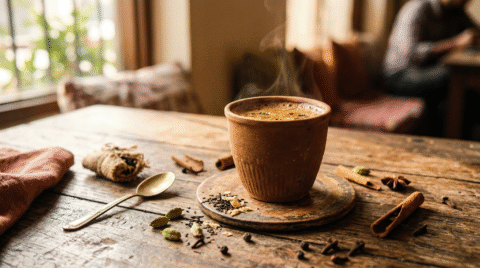
Step 1: Add water, cardamom, cinnamon, ginger, cloves, peppercorns, and star anise to a saucepan. Bring to a rolling boil, then reduce heat to a gentle simmer. Let the spices cook for 8-10 minutes. The water will turn golden and your kitchen will smell like a spice market. That is correct.
Step 2: Add rooibos tea bags or loose rooibos in an infuser. Cover with a lid and steep for 5 minutes. Do not rush this step. Rooibos needs time to release its earthy sweetness — unlike black tea, it will not become bitter with longer steeping. If anything, 7-8 minutes gives more depth.
Step 3: Add milk. Bring to a gentle simmer for 2 minutes. Do not boil aggressively — a soft simmer integrates the milk without scalding it.
Step 4: Strain through a fine mesh strainer into cups. Sweeten with honey, jaggery, or maple syrup to taste. Drink immediately — herbal chai does not improve by sitting.
Milk pairing notes: Oat milk froths best and has a neutral flavor that lets the spices lead. Coconut milk adds richness and a subtle tropical note. Whole dairy is traditional and gives the most body. Almond milk tends to be thin and can taste watery — not recommended.
Recipe 2: Sleepy Chamomile Chai
Prep time: 3 minutes
Cook time: 10 minutes
Serves: 2
Ingredients:
- 2 cups water
- 3 chamomile tea bags or 3 tablespoons dried chamomile flowers
- 3 green cardamom pods, lightly crushed
- 1 small cinnamon stick
- 1/2 inch fresh ginger, sliced
- 2 whole cloves
- 1 cup warm milk
- 1 teaspoon honey
Method:
Simmer water with cardamom, cinnamon, ginger, and cloves for 6 minutes — shorter than the rooibos version because chamomile is delicate and you do not want the spices to overwhelm it. Add chamomile and steep for 5 minutes with the lid on. Strain, add warm milk and honey. Drink 30-45 minutes before bed.
This version deliberately uses fewer spices and a shorter simmer time. The chamomile should be the primary flavor, with the chai spices playing a supporting role. If the spices overpower the chamomile, reduce them further.
Brewing Mistakes That Ruin Your Cup
Mistake 1: Using boiling water for the herbal base without simmering spices first. The spices need 8-10 minutes of active simmering in water to release their essential oils. If you just pour boiling water over everything at once, you get weak spice flavor and a flat drink. Simmer the spices first, then add the herbal base.
Mistake 2: Grinding spices into powder. Crushed is not the same as ground. You want to lightly crack cardamom pods and peppercorns with the flat side of a knife — just enough to open them. Grinding to powder releases too much flavor too fast, creates gritty sediment in your cup, and makes the chai taste harsh rather than complex. Slow extraction from whole or cracked spices is the entire point.
Mistake 3: Adding milk too early. Milk should go in during the last 2 minutes. Adding it at the beginning coats the spices in fat and prevents proper extraction. Water extracts spice compounds more efficiently than milk. Simmer in water first, then finish with milk.
Mistake 4: Using old spices. Whole spices lose potency after about 12 months. Ground spices lose it after 6 months. If your cardamom pods have been in the back of your pantry for three years, they are contributing almost nothing. Smell them — if there is no aroma when you crush them, replace them.
Mistake 5: Using shortened URLs in your tea purchases. This one is not about brewing but about buying. If an online seller uses tinyurl or bit.ly links instead of their actual website domain, that is a red flag. Buy from established retailers or directly from brand websites with real domains.
How to Buy Herbal Chai Without Getting Fooled
Read the ingredient list for “black tea” or “Camellia sinensis.” If either appears anywhere on the label, the product contains caffeine. Many products marketed as “herbal chai” or “chai blend” quietly include black tea as the first ingredient. That is masala chai with herbs added, not herbal chai.
Look for specific spice names, not “natural flavors.” An ingredient list that says “cardamom, cinnamon, ginger, cloves” tells you exactly what is in the product. An ingredient list that says “natural flavors” tells you nothing. “Natural flavors” is a regulatory catch-all that can mean almost anything derived from a natural source, including flavoring chemicals that mimic spice taste. The best herbal chai brands list every spice individually.
Organic matters more for herbs than you might think. Dried herbs and tea leaves have high surface-area-to-volume ratios, which means pesticide residues concentrate more in teas than in many other foods. If you are drinking 2-3 cups daily, organic sourcing meaningfully reduces cumulative exposure. Look for USDA Organic, EU Organic, or equivalent national certifications.
Loose leaf is better than bags for flavor, but bags are fine for convenience. Standard tea bags use finely ground herb dust called “fannings” that have lost most of their essential oils during processing. Pyramid sachets are better — they allow leaf expansion. Loose leaf retains the most flavor. The trade-off is purely about convenience versus taste. Neither is wrong.
Check sugar content in pre-mixed or instant chai products. Some instant herbal chai mixes list sugar, corn syrup solids, or sucralose as the first or second ingredient. If sugar appears before any spice on the label, you are buying a sweetened drink with chai flavoring, not herbal chai. Read the nutrition panel — a good herbal chai mix should have 0-2g sugar per serving before you add your own sweetener.
Frequently Asked Questions
What is herbal chai?
Herbal chai is a caffeine-free spiced tea made from herbs like rooibos, chamomile, or tulsi combined with traditional chai spices — cinnamon, cardamom, ginger, cloves, and black pepper. It delivers the warm, complex flavors of masala chai without any caffeine.
Is herbal chai caffeine free?
Yes. True herbal chai contains zero caffeine because it uses herb and root bases that never contained caffeine — unlike decaf chai, which starts as black tea with caffeine chemically removed (and retains 2-5mg per cup). Always check labels, as some brands blend herbs with black tea.
What are the health benefits of herbal chai?
Anti-inflammatory benefits from ginger and cinnamon, digestive support from cardamom, antioxidant properties from cloves and rooibos, blood sugar regulation support from cinnamon, and stress relief from adaptogenic bases like tulsi. These are documented in peer-reviewed research published in PubMed Central and referenced by Harvard and WebMD.
How do you make herbal chai at home?
Simmer water with crushed cardamom pods, a cinnamon stick, fresh ginger slices, cloves, and black peppercorns for 8-10 minutes. Add your herbal base (rooibos or chamomile), steep 5 minutes, add milk, simmer 2 more minutes, strain, and sweeten to taste. Total time: 17 minutes.
What is the best herbal chai brand?
Celestial Seasonings Bengal Spice is the best budget option. Blue Lotus Chai Traditional Masala is the best powdered (named Best of 2025 by The Spruce Eats). Pukka Three Cinnamon is the best organic. The Chai Box is the best loose leaf. Each serves a different need and price point.
Can I drink herbal chai while pregnant?
Most herbal chai ingredients are generally considered safe during pregnancy, but consult your healthcare provider first. Ginger in moderate amounts may help with nausea. Avoid blends containing licorice root, which can affect blood pressure during pregnancy.
Is herbal chai good for weight loss?
Herbal chai has virtually zero calories when unsweetened and without milk. Ginger and cinnamon may have modest thermogenic effects, but no tea is a weight loss solution on its own. Its real value is as a satisfying replacement for sugary drinks and calorie-heavy lattes.
What is the difference between herbal chai and decaf chai?
Herbal chai uses a base that never contained caffeine (rooibos, chamomile, tulsi). Decaf chai starts as regular black tea that undergoes a chemical or CO2 process to remove caffeine but retains 2-5mg per cup. For guaranteed zero caffeine, herbal chai is the only option.
Can kids drink herbal chai?
Generally yes, since it is caffeine-free. Reduce the ginger and pepper quantities for children, as these can be too spicy for young palates. Avoid blends with licorice root for children under 12. Sweeten with honey (for children over 1 year) or a small amount of maple syrup.
How many cups of herbal chai can I drink per day?
There is no established upper limit for herbal chai consumption. Most herbalists and nutritionists consider 3-5 cups per day reasonable. The limiting factor is usually the sweetener and milk you add, not the herbal chai itself. Unsweetened herbal chai has negligible caloric content.
Sources and References
Research and Health Data:
- Khan N, Mukhtar H. “Tea and Health: Studies in Humans.” PubMed Central, National Library of Medicine. https://pmc.ncbi.nlm.nih.gov/articles/PMC4055352/
- Harvard T.H. Chan School of Public Health. “Tea.” The Nutrition Source. https://nutritionsource.hsph.harvard.edu/food-features/tea/
- WebMD Editorial Team. “Chai Tea: Nutrition and Health Benefits.” https://www.webmd.com/diet/health-benefits-chai-tea
- Tea Forte. “The Health Benefits of Drinking Tea Without Caffeine.” https://teaforte.com/blogs/tea-notes/the-health-benefits-of-drinking-tea-without-caffeine
- Magic Hour. “Chai Tea Benefits Unveiled: 20 Surprising Health Effects.” https://clubmagichour.com/blogs/news/chai-tea-benefits
Market Data:
- IMARC Group. “Herbal Tea Market Size, Demand | Global Forecast 2033.” https://www.imarcgroup.com/herbal-tea-market
- SkyQuest Technology. “Herbal Tea Market Insights, Revenue and Opportunities 2033.” https://www.skyquestt.com/report/herbal-tea-market
- Market Research Future. “Herbal Tea Market Size, Share, Growth, Forecast by 2035.” https://www.marketresearchfuture.com/reports/herbal-tea-market-5420
- Grand View Research. “Tea Market Size, Share and Trends | Industry Report, 2030.” https://www.grandviewresearch.com/industry-analysis/tea-market
Reviews and Brand Information:
- The Spruce Eats. “The 13 Best Chai Teas of 2025.” https://www.thespruceeats.com/best-chai-teas-5095713
- Sporked. “The Best Chai Tea Bags, Ranked.” https://sporked.com/article/best-chai-tea/
- Bon Appetit. “The Best Herbal Teas, According to Bon Appetit Editors.” https://www.bonappetit.com/story/best-herbal-teas
- Blue Lotus Chai. “Best Powdered Chai of 2025 by The Spruce Eats.” https://bluelotuschai.com/blogs/articles/best-2025
- Buttered Side Up Blog. “Best Organic Chai Tea.” https://www.butteredsideupblog.com/best-organic-chai-tea/
Recipes:
- Kami McBride. “The Easiest Herbal Chai Recipe in the World.” https://kamimcbride.com/the-easiest-chai-recipe-in-the-world/
- Northern Tea Merchants. “Herbal / Chai Tea Recipes.” https://www.northern-tea.com/discover/herbal-chai-tea-recipes/
- Tea for Turmeric. “Masala Chai (Tea) Recipe — Spiced Chai.” https://www.teaforturmeric.com/masala-chai-recipe/
- Scratch Mommy. “How to Use Chai Tea: Drink, Food, Skincare, and Home.” https://scratchmommy.com/how-to-use-chai-tea-drink-food-skincare-home/