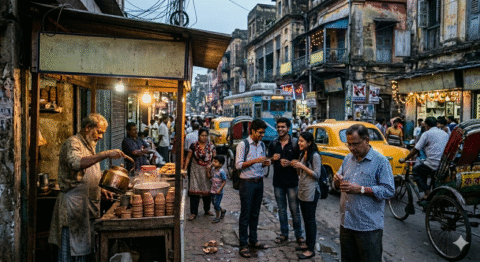
In the heart of West Bengal lies a city that refuses to be rushed. Kolkata, formerly Calcutta, is a place where history isn’t just kept in museums; it is lived on the streets. If you walk through the narrow lanes of North Kolkata, navigate the bustling markets of Gariahat, or stand near the iconic Howrah Bridge, you will witness a singular, recurring sight: a person holding a small, unglazed earthen cup filled with a steaming, amber-colored liquid. This is Bharer Chai, and to the people of Kolkata, it is not merely a beverage. It is the social glue of the city, the emotional heartbeat of its people.
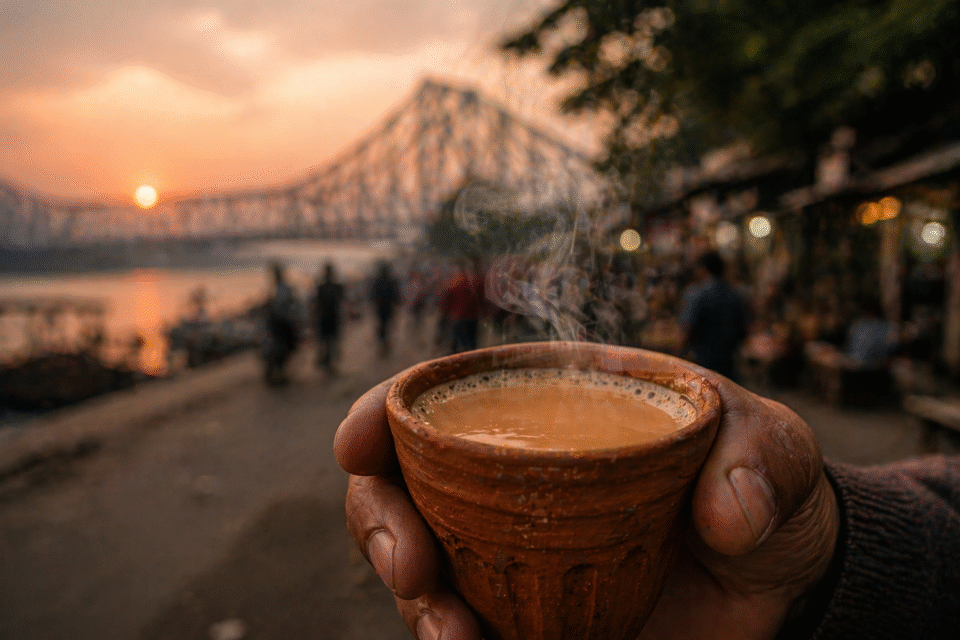
At Chaiolic.com, we believe that understanding the soul of tea means understanding the culture that surrounds it. In this exhaustive exploration, we dive deep into the origins, the science, and the spiritual significance of the ‘Bhar’ (the clay cup) and why it remains the ultimate way to consume tea in the 21st century.
The Historical Tapestry of Tea in Bengal
The story of tea in Kolkata begins in the early 19th century, during the British Raj. While tea was being cultivated in the high hills of Darjeeling and the vast plains of Assam, Kolkata was the gateway through which this “Green Gold” reached the world. However, for a long time, tea was an elite drink, consumed in fine porcelain by the British and the wealthy Bengali zamindars. It wasn’t until the mid-20th century that tea became a commoner’s drink. The street stalls began appearing, offering a simplified, robust version of the brew that was accessible to everyone from the humble rickshaw puller to the high-court lawyer.
The choice of the earthen cup, or ‘Bhar’, was a stroke of genius born from necessity. In a time before disposable plastics and paper, the clay cup offered a hygienic, single-use, and incredibly cheap alternative to glass or porcelain. But more than that, it offered a flavor that was uniquely Bengali. As the city grew, the ‘Bhar’ became its symbol—a humble vessel for a complex city.
The Science of the Clay: Why It Tastes Better
Have you ever wondered why tea tastes different in a clay cup compared to a stainless steel or plastic one? It isn’t just psychological. There is a deep-seated chemical interaction between the tea and the unglazed earthenware. The clay used in ‘Bhars’ is porous and slightly alkaline. When the hot tea—which is naturally acidic—touches the surface of the clay, a mild neutralization process occurs. This reduces the sharp bitterness often found in strong CTC teas, making the brew smoother and more rounded.
Furthermore, the ‘Bhar’ is a natural insulator. It retains the heat of the tea while allowing the aroma to escape through its porous walls. This aroma, known as ‘Sondhe Maatir Gondho’ (the scent of dry earth after rain), is an essential part of the flavor profile. As you sip the tea, your olfactory senses are stimulated by the smell of the earth, creating a multi-sensory experience that connects you back to nature. This is the level of authenticity we strive for at Chaiolic. We don’t just want you to taste the tea; we want you to experience the environment it reflects.
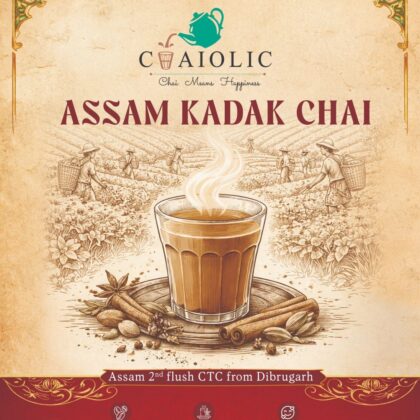
View Our Chaiolic Products
The Craft of the Potter: Shaping the City’s Pride
To talk about ‘Bharer Chai’ without mentioning the potters would be a disservice. On the banks of the Hooghly River, entire communities of artisans have spent generations shaping these cups by hand. They use the river’s silt, which is rich in minerals and perfectly suited for fast-firing. A skilled potter can produce hundreds of ‘Bhars’ in a single day, and yet, no two are exactly the same. They are fired in traditional kilns using rice husks and wood, which gives them their characteristic smoky finish.
This is a disappearing art form in many parts of India, but in Kolkata, it thrives. The city’s refusal to switch to plastic is a tribute to these artisans. By drinking ‘Bharer Chai’, you are supporting a decentralized economy that empowers thousands of rural craftsmen. At Chaiolic.com, we are committed to highlighting these traditional crafts because they represent the “human touch” that we believe is essential to the tea journey.
The Sociology of the Tea Stall: The ‘Adda’ Culture
In Kolkata, you don’t just “get a tea” and leave. The tea stall is a public square. It is where Adda happens. Adda is the uniquely Bengali practice of informal, long-form conversation. It can range from sports and cinema to high politics and existentialist philosophy. The tea stall is the great leveler; here, social classes dissolve. The billionaire and the beggar both hold the same clay cup, both wait for the same brew, and both have an equal voice in the debate.
The ‘Chayer Dokan’ (the tea shop) acts as a neighborhood hub. The vendor often knows his customers by name, their life stories, and their specific tea preferences. “Dada, a little more ginger today?” or “Did you hear about the election results?”—these are the sounds of a community in conversation. This sense of belonging is what we at Chaiolic aim to replicate. We don’t just sell packets of tea; we provide the catalyst for community building. We want our tea to be the start of your next great conversation.
The Environmental Loop: Zero Plastic, Zero Waste
One of the most remarkable things about ‘Bharer Chai’ is its sustainability. In an age where the world is drowning in microplastics, the Kolkata tea stall offers a blueprint for the future. When you finish your tea, the ritual is to drop the ‘Bhar’ onto the ground where it shatters. Over time, with rain and traffic, these pieces are crushed back into the soil from which they came. There is no waste, no chemical pollution, and no energy-intensive recycling. It is the ultimate “circular economy.” At Chaiolic.com, we are deeply inspired by this ecological wisdom. We strive to bring that same respect for nature to our packaging and sourcing practices.
Chaiolic.com: Bringing the Spirit to Your Home
We know that you cannot always be in Kolkata. You cannot always stand by the roadside with the sound of the trams in your ears. But you *can* experience the flavor that inspired this city. Our Heritage Collection is a result of years of research into the specific blends used by the most famous tea stalls in Bengal. We combine the strength of Assam’s boldest CTC with the aroma of Darjeeling’s finest Orthodox leaves to give you a cup that is dark, rich, and unmistakably ‘Kolkata’.
Whether you’re looking for our Signature Masala Blend or our Kolkata Kadak, every product we ship is a tribute to the city of Joy. We invite you to join the Chaiolic family. Let us help you turn your kitchen into a ‘Chayer Dokan’. Invite your friends, brew a strong pot, and start your own Adda. After all, tea is best served with a side of conversation.
Conclusion: The Future of a City’s Drink
As Kolkata modernized, some feared that ‘Bharer Chai’ would disappear, replaced by high-end coffee chains. But the opposite has happened. The ‘Bhar’ has become a badge of honor, a symbol of resistance against the homogenization of global culture. It is a reminder that some things are perfect the way they are. The ‘Bhar’ is honest, it is earthen, and it is timeless.
The soul of Kolkata is not in its monuments, though they are grand. It is not in its history, though it is vast. It is in the 10p, hot, clay cup of tea that you hold in your hand on a rainy afternoon. It is in the steam that rises, the conversations that flow, and the earth that remains. We at Chaiolic.com are proud to be the global ambassadors for this culture. We hope you will join us in celebrating the humble clay cup and the magnificent tea it carries.
Explore the tastes of Kolkata today at Chaiolic.com. Authentic. Earthen. Exceptional.