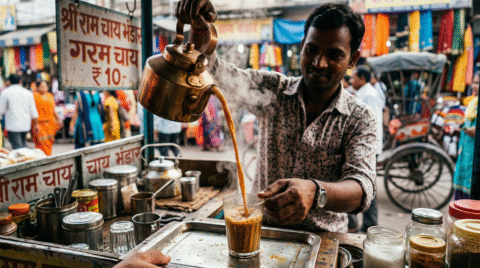
Kolkata is known as the cultural capital of India. Its literary tradition runs deep, stretching back centuries. And at the heart of this tradition, quietly but consistently, sits a cup of chai.
From colonial-era tea houses to modern-day writing desks, chai has been a constant companion to Kolkata’s writers, poets, and thinkers.
The Colonial Beginnings
Tea arrived in Kolkata during British rule. The British established tea gardens in Assam and Darjeeling, and Kolkata became the trading hub for the industry. Tea houses and coffee houses opened across the city.
The Indian Coffee House on College Street, despite its name, became a centre for chai-drinking intellectuals. Writers, professors, and students gathered there daily, fuelling debates and creative work with endless cups of tea.
Chai at College Street
College Street is the literary nerve centre of Kolkata. Home to hundreds of bookshops, publishing houses, and academic institutions, the street has always been associated with chai.
Writers would sit at small tea stalls near the street, discuss manuscripts, review poetry, and plan literary magazines over cups of tea. The chai stall became an informal office for many of Bengal’s greatest literary minds.
Writers Who Loved Chai
Many of Bengal’s most celebrated writers were known for their love of tea:
- Rabindranath Tagore was a regular tea drinker who found inspiration in quiet moments with a cup
- Satyajit Ray discussed film scripts over chai at College Street
- Sunil Gangopadhyay was a familiar face at tea stalls and coffee houses
- Shankha Ghosh and other poets used adda sessions fuelled by chai to sharpen their work
These writers did not just drink chai. They thought, created, and refined their work around it.
Chai as a Creative Catalyst
The relationship between chai and creativity is not accidental. Tea contains caffeine and L-theanine, which together promote focused calm. This state is ideal for writing, reading, and deep thinking.
For Kolkata’s literary community, chai provided the mental clarity needed for long writing sessions and the social energy needed for adda discussions.
The Literary Tea Stall
In Kolkata, certain tea stalls became famous for their literary connections. Writers knew where to find each other. Publishers dropped by to discuss new books. Students came hoping to meet their favourite authors.
The tea stall was the neutral ground where all levels of the literary world met. A cup of chai was the entry fee.
Modern Literary Chai Culture
The tradition continues. Contemporary Kolkata writers, bloggers, journalists, and poets still gather for chai. Book launch events often include tea. Literary festivals serve chai to attendees.
New generation writers working from cafes and co-working spaces carry the same chai-fuelled creative process forward.
Chai in Bengali Literature
Chai appears frequently in Bengali fiction and poetry. It is used as a symbol of comfort, routine, friendship, and sometimes melancholy. The image of a character holding a cup of chai at a roadside stall is a familiar scene in Bengali storytelling.
This literary presence reflects how deeply chai is embedded in Kolkata’s daily life.
Chaiolic and the Literary Spirit
Chaiolic honours Kolkata’s tradition of chai as a companion to thought and creativity. Every cup is crafted to inspire focus, comfort, and conversation.
Whether you are writing your first story or reading a classic novel, the right chai sets the mood.
Final Sip
Kolkata’s literary heritage and chai culture are woven together. One cannot be fully understood without the other.
The next time you hold a cup of chai, remember that you are participating in a tradition that has shaped some of India’s greatest literary works.