Tea in Kolkata is not a once-a-day habit. It is a rhythm that structures the entire day. If you are visiting the city or simply want to understand its culture, knowing when Kolkata drinks its tea is as important as knowing where. Timing affects the type of tea served, the atmosphere at the stall, and the kind of experience you will have.
Early Morning: 5:30 AM to 7:00 AM
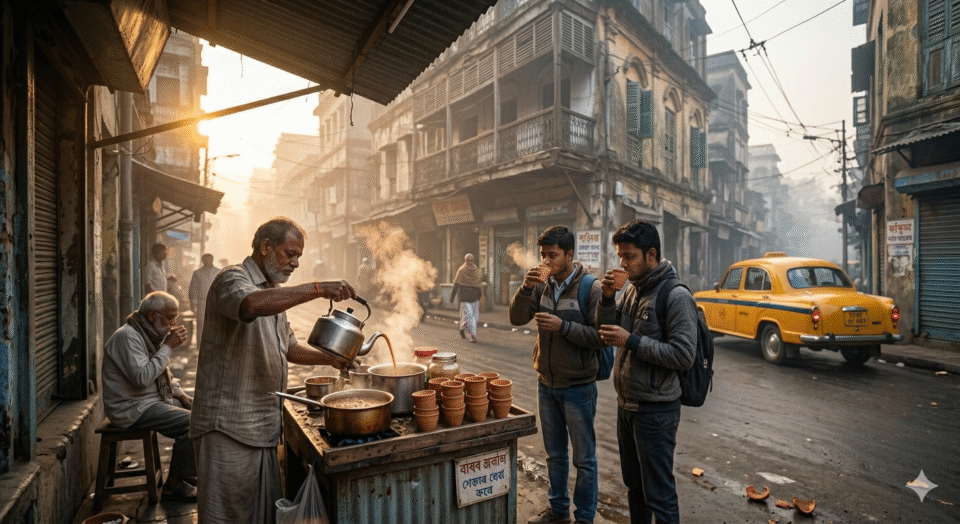
Kolkata wakes up early, and tea is the first order of business. Before most shops open, before the traffic builds, the chai stalls are already operational. At this hour, the clientele is mostly working-class: rickshaw pullers, vegetable vendors heading to the wholesale market, domestic workers on their way to morning shifts, and morning walkers returning from their rounds.
The tea served at this hour tends to be simple and strong. No elaborate masala blends, no fancy additions. Just dark, boiling CTC tea with milk and sugar, served in a clay Bhar. The mood is quiet. People drink quickly and move on. If you are an early riser and want to see Kolkata in its most unguarded state, this is the time to visit a tea stall. The city is honest at dawn.
Mid-Morning: 9:00 AM to 11:00 AM
This is when the office crowd takes over. By 9 AM, Kolkata’s commercial districts are buzzing. Workers stop at their regular stalls for a quick cup before heading into offices, courts, and government buildings. The pace is faster here. People check their phones while sipping tea. Conversations are brief and focused, often about work or the morning’s headlines.
In areas like BBD Bagh, Esplanade, and Park Street, you will find stalls that cater specifically to this demographic. Some offer biscuits or toast alongside the tea. The tea is standard Kolkata strength, nothing experimental. This is functional tea, designed to sharpen the mind for the workday ahead.
View Our Chaiolic Products


The Sacred Hour: 4:00 PM to 5:30 PM
If there is one time of day that defines Kolkata’s relationship with tea, it is the late afternoon. Bengalis call this “Bikeler Cha,” and it is treated with near-religious seriousness. Offices slow down. Students leave campus. Families at home put the kettle on. The entire city pauses for tea.
This is when the Adda culture peaks. Tea stalls are at their busiest. Groups form, conversations begin, and the clay cups pile up. The tea served during this window is often the best of the day because vendors know demand will be highest. Some stalls prepare special batches with fresh ginger or extra cardamom.
If you only have one chance to experience Kolkata’s chai culture, choose this window. The energy, the noise, the aroma, and the sheer volume of tea being consumed make it an unforgettable experience. Every tea lover visiting India should prioritize this time slot.
Evening: 6:30 PM to 8:00 PM
As the sun sets and the streetlights come on, Kolkata’s tea stalls take on a different character. The evening crowd is more relaxed. Families take evening walks and stop for tea. Young couples sit on park benches with cups in hand. Students gather after tuition classes.
The tea at this hour sometimes shifts toward lighter preparations. Lal Cha, the red tea without milk, becomes more popular. Some vendors offer lemon tea or ginger tea without milk, which feels refreshing after a long day. The mood is gentler, less urgent. If you prefer a calmer tea experience, the evening window is ideal.
Late Night: 10:00 PM to Midnight
Kolkata has a surprisingly active late-night tea scene. In areas like Gariahat, College Street, and parts of North Kolkata, stalls remain open well past 10 PM. The late-night crowd includes students studying for exams, taxi drivers between fares, and night owls who simply enjoy the quiet of a city winding down.
The tea here is often the strongest of the day. Vendors use extra leaves and less milk to produce a concentrated brew that can keep you awake for hours. There is an intimacy to late-night chai in Kolkata. The crowds thin, the conversations become more personal, and the city feels like it belongs to you.
Seasonal Variations
Kolkata’s climate also affects tea habits. During the monsoon season from June to September, tea consumption spikes. There is something deeply satisfying about holding a hot clay cup while rain hammers the tin roof of a tea stall. The aroma of wet earth blends with the smell of brewing tea, creating a sensory experience that is hard to describe and impossible to forget.
In winter, from December to February, masala chai with heavy spices becomes the preferred style. The cold morning air makes that first sip feel almost medicinal. Summer calls for lighter preparations, and some progressive stalls now offer iced variants, though purists consider this borderline heretical.
Practical Tips for Visitors
If you are planning a tea-focused trip to Kolkata, here are some practical suggestions. Visit multiple stalls at different times to understand the full spectrum. Do not judge the entire culture by one cup at one stall. Carry small denominations of cash since most street vendors do not accept cards. And most importantly, do not rush. The entire point of Kolkata’s tea culture is to slow down. Let the city set the pace, and you will get far more from the experience than any guidebook can promise.