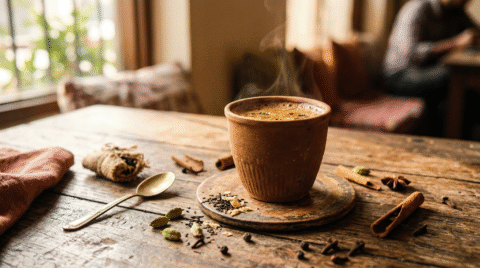
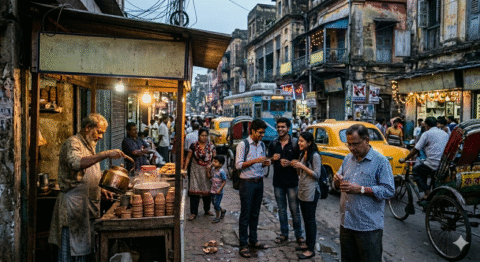
Everyone in India claims their masala chai is the best. Mumbai says it. Delhi says it. Jaipur says it. But there is something specific about the masala chai you find in Kolkata that sets it apart, and it is not just the clay cup or the brewing method. It is the spice blend, the ratios, and the restraint. Kolkata’s masala chai does not shout at you. It speaks quietly and stays with you longer.
The Base: CTC Tea Leaves
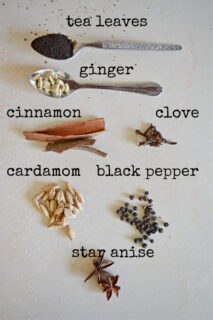
Everything starts with the tea leaves. Kolkata’s masala chai uses CTC tea, almost exclusively sourced from Assam and Dooars. The granules are small, dark, and tightly rolled. CTC tea brews fast and strong, which is essential because masala chai needs a robust base to carry the spices. If the tea is weak, the spices overwhelm it. If the tea is too strong, it masks the spice nuances. The balance is delicate, and Kolkata’s vendors have perfected it over decades.
The grade of CTC matters as well. Most reputable stalls use BOP (Broken Orange Pekoe) or BOPSM (Broken Orange Pekoe Small) grades. These are mid-to-upper tier granules that offer good strength without excessive dust. Cheaper grades tend to produce a muddy, overly tannic brew that fights against the spices rather than working with them.
Ginger: The Non-Negotiable
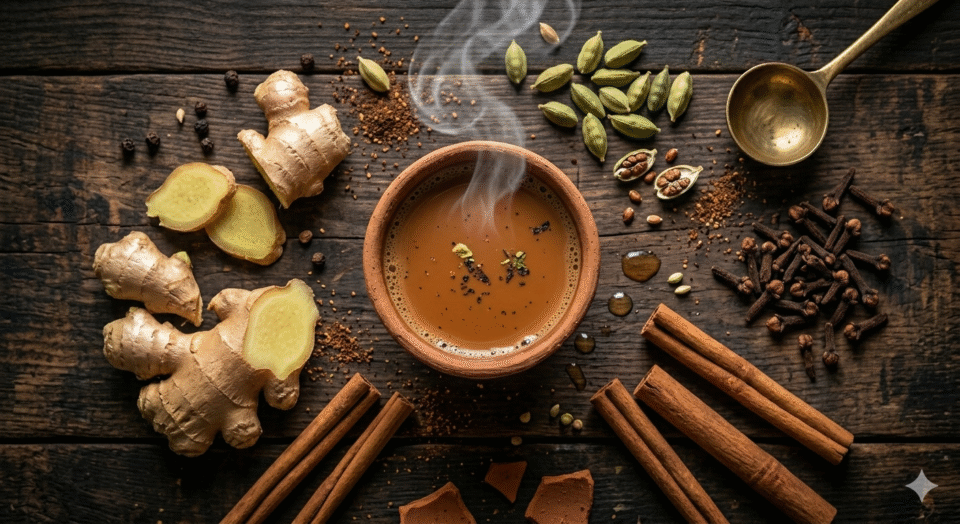
If there is one ingredient that defines Kolkata’s masala chai, it is fresh ginger. Not ginger powder. Not dried ginger. Fresh, raw, skin-on ginger, crushed or grated directly into the boiling water. The difference between fresh and dried ginger in tea is enormous. Fresh ginger delivers a sharp, clean heat that wakes up the palate. Dried ginger tends to be duller and sometimes tastes slightly medicinal.
Most Kolkata vendors use a generous amount. Some crush it with a stone pestle right at the stall, which releases the volatile oils at the last possible moment. This is a small detail, but it matters. Pre-ground ginger loses its potency quickly. Freshly crushed ginger transforms the entire cup.
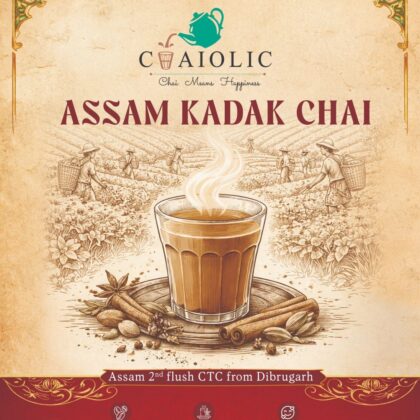
View Our Chaiolic Products
Cardamom: The Quiet Star
Green cardamom is the second most important spice in Kolkata’s masala chai. It provides a sweet, floral, slightly menthol-like note that lifts the brew. The key is restraint. Too much cardamom and the tea tastes like perfume. Too little and you lose the fragrance entirely.
Most vendors crack one or two pods per cup, releasing the tiny black seeds inside. Some grind the whole pod, shell included, which adds a slightly woody undertone. The best stalls use cardamom from Kerala or Guatemala, which tend to have higher essential oil content than cheaper alternatives.
Clove: The Background Note
Cloves appear in Kolkata’s masala chai, but sparingly. A single clove per cup is standard. Its role is to add depth and a faint numbing warmth to the back of the throat. Clove is powerful, and overuse is a common mistake in masala chai recipes across India. Kolkata’s approach is more conservative, treating clove as a supporting character rather than a lead.
Cinnamon: The Warm Embrace
Cinnamon, specifically the true Ceylon variety rather than the more common cassia, makes occasional appearances in Kolkata’s masala chai. It adds sweetness and warmth without extra sugar. Not every stall uses it, but those that do tend to produce a more rounded, dessert-like cup. A small piece of cinnamon bark, about half an inch, is enough. Anything more tends to dominate the other spices.
Black Pepper: The Hidden Kick
This is where Kolkata’s masala chai differs from many other regional versions. A pinch of freshly cracked black pepper is added to some preparations, particularly during winter or monsoon season. The pepper adds a back-end heat that lingers after the sip. It also has a practical function: black pepper aids digestion and helps the body absorb the beneficial compounds in the tea and other spices.
What Kolkata Leaves Out
Equally important is what you will not find in authentic Kolkata masala chai. Fennel seeds, star anise, and bay leaves, which are common in North Indian chai masala blends, are rarely used in Kolkata. The philosophy is different. North Indian masala chai aims for complexity through volume of ingredients. Kolkata masala chai aims for clarity through careful selection. Each spice is identifiable in the cup, and none competes with the others.
The Milk and Sugar
Full-fat milk is standard. Toned or skimmed milk produces a thinner, less satisfying cup. The milk is added after the tea and spices have boiled together, ensuring that the water extracts maximum flavor from the leaves and spices before the milk tempers the mixture.
Sugar is added liberally. Bengalis have a well-documented sweet tooth, and their chai reflects this. However, the sugar is not just for sweetness. It rounds out the bitterness of the CTC tea and the sharpness of the ginger, creating a more harmonious overall flavor.
Recreating It at Home
If you want to replicate Kolkata’s masala chai at home, here is a straightforward approach. For two cups, use one and a half cups of water, half a cup of full-fat milk, two teaspoons of CTC tea, a one-inch piece of fresh ginger (crushed), two green cardamom pods (cracked), one clove, and sugar to taste. Bring the water to a rolling boil. Add ginger, cardamom, and clove. Let it boil for one minute. Add tea leaves. Boil for two minutes until the water turns dark brown. Add milk. Boil for another minute. Strain and serve.
The result will not be identical to what you get on a Kolkata street, because the water, the atmosphere, and the clay cup all contribute. But it will be close. And once you taste it, you will understand why Kolkata takes its masala chai so seriously.