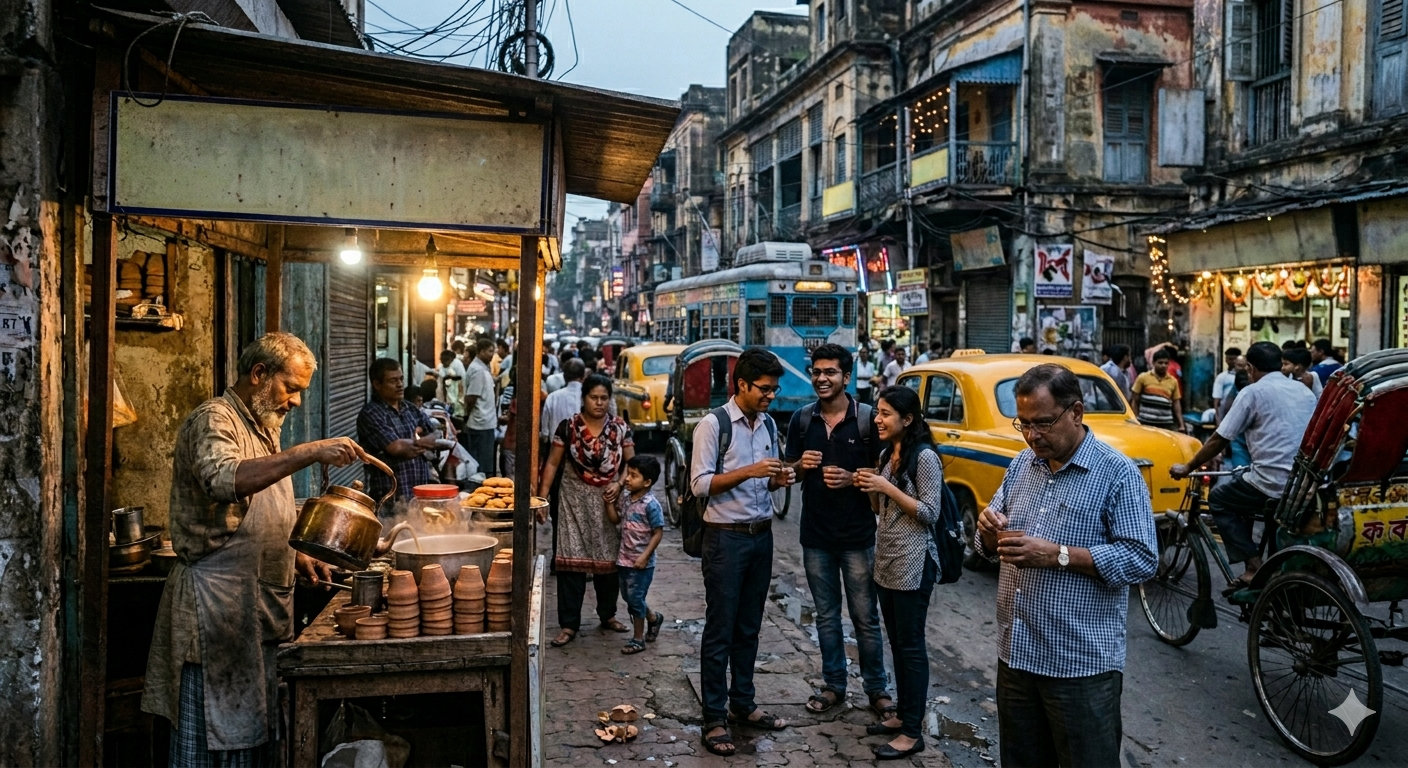
If you have ever visited Kolkata and not stopped at a street-side chai stall, you have not really visited Kolkata. That is not an exaggeration. The city runs on tea the way other cities run on coffee or cold brew. Every corner, every lane, every marketplace has at least one person brewing strong, milky chai in a blackened aluminum kettle. And honestly, after spending years tasting tea across India, I can say with confidence that Kolkata’s street chai is in a league of its own.
What Makes Street-Side Chai in Kolkata Different?
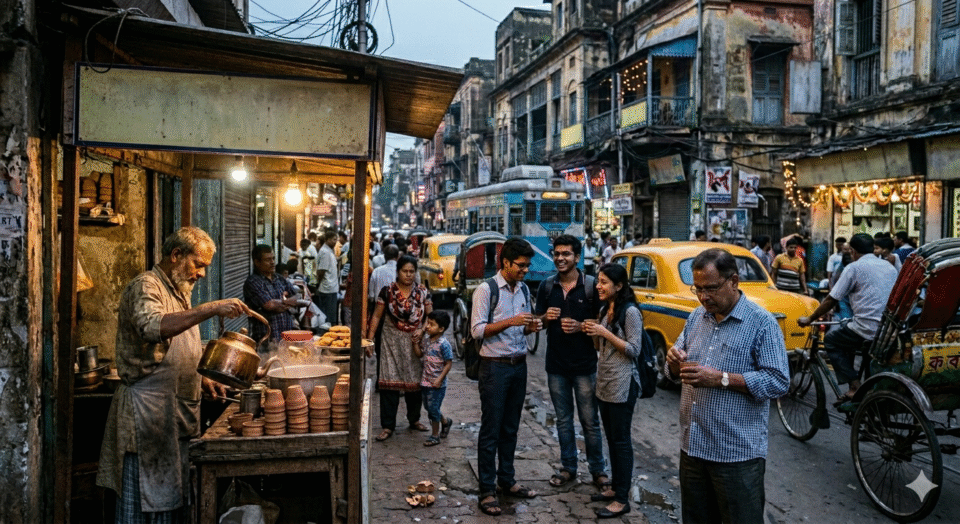
The first thing you notice is the clay cup. Most stalls in Kolkata still serve tea in a small, unglazed earthen cup called a “Bhar.” The moment the vendor pours that dark, boiling liquid into the clay, something changes. The tea picks up an earthy, smoky note that you simply cannot replicate in ceramic or glass. It is not a gimmick. It is tradition, and it genuinely improves the taste. If you are searching for the best chai in Kolkata, the Bhar is non-negotiable.
The tea itself is typically made with strong CTC leaves, full-fat milk, and a generous amount of sugar. Some stalls add ginger, cardamom, or a pinch of black pepper. The brewing method matters too. Most vendors boil the tea for several minutes, sometimes letting it reduce until the flavor is concentrated and thick. The result is a cup that hits hard, warms your chest, and stays with you for hours.
Top Street-Side Chai Stalls Worth Visiting
Let me walk you through some stalls I have personally visited and would recommend without hesitation.
Balaram Mullick & Radharaman Mullick (Bhawanipur): Yes, they are famous for sweets, but their tea counter is quietly excellent. The chai here is strong, well-balanced, and served with precision. Pair it with a piece of their sandesh and you have a perfect Kolkata afternoon.
Indian Coffee House (College Street): Technically a coffee house, but the tea here is legendary. The ambiance alone is worth the visit. Writers, professors, and students have been debating over cups of tea in this building for decades. The chai is simple, no-frills, and honest.
Favorite Cabin (Surya Sen Street): A tiny establishment with limited seating, but the tea is outstanding. It is one of those places where regulars outnumber tourists ten to one, which is usually a reliable indicator of quality.
Dolly’s Tea Shop (Dakshineshwar): Near the famous Kali Temple, Dolly’s serves a ginger-heavy chai that is perfect after a long temple visit. The stall is small, the seating is basic, but the flavor is memorable.
Tea stalls near New Market: You do not need a specific name here. The entire stretch around New Market is lined with vendors, and most of them serve excellent tea. Walk around, follow the crowd, and pick the stall with the longest queue.
View Our Chaiolic Products
What to Expect as a First-Time Visitor
If you are visiting Kolkata for the first time and want to experience authentic street chai, here is what you should know. First, do not expect Instagram-worthy presentation. This is not artisanal, curated tea. It is rough, fast, and served without ceremony. That is the charm. Second, the cups are small, usually around 80 to 100 ml. You will likely want two or three. Third, most stalls do not have formal seating. You stand, you sip, you talk, and you leave. That is the rhythm.
Pricing is another pleasant surprise. A cup of street chai in Kolkata costs between five and fifteen rupees depending on the location. For that price, you get a drink that rivals anything served in high-end tea lounges for ten times the cost. The value is extraordinary.
The Hygiene Question
I know some travelers hesitate at street food and drink. It is a fair concern. From my experience, the boiling process itself addresses most hygiene issues since the tea is brewed at extremely high temperatures. The clay cups are single-use and discarded after drinking, which eliminates the risk of contaminated reusable cups. That said, use your judgment. If a stall looks neglected or the water source seems questionable, move on to the next one. There is never a shortage of options.
Why Kolkata’s Street Chai Culture Matters
Beyond the taste, what makes Kolkata’s chai stall culture valuable is its social function. These stalls are gathering points. They are where neighbors catch up, where political opinions are formed, where strangers become acquaintances. The Bengali word for this informal social exchange is “Adda,” and it is inseparable from tea. You cannot have Adda without chai, and you cannot have chai without Adda.
In a world increasingly dominated by takeaway cups and drive-throughs, Kolkata’s tea stalls remind us that slowing down is not a weakness. It is a way of living. The city has resisted the pressure to modernize its tea culture into something sterile and efficient, and I think that is worth celebrating.
Final Verdict
If you are planning a trip to Kolkata, put the street chai experience at the top of your list. It is cheap, it is authentic, and it will change the way you think about tea. Forget the fancy tea rooms. The best cup of chai in Kolkata is the one handed to you by a vendor who has been perfecting his recipe for thirty years, served in a clay cup that will crumble back into the earth by tomorrow. That is the real Kolkata tea experience, and nothing else comes close.